
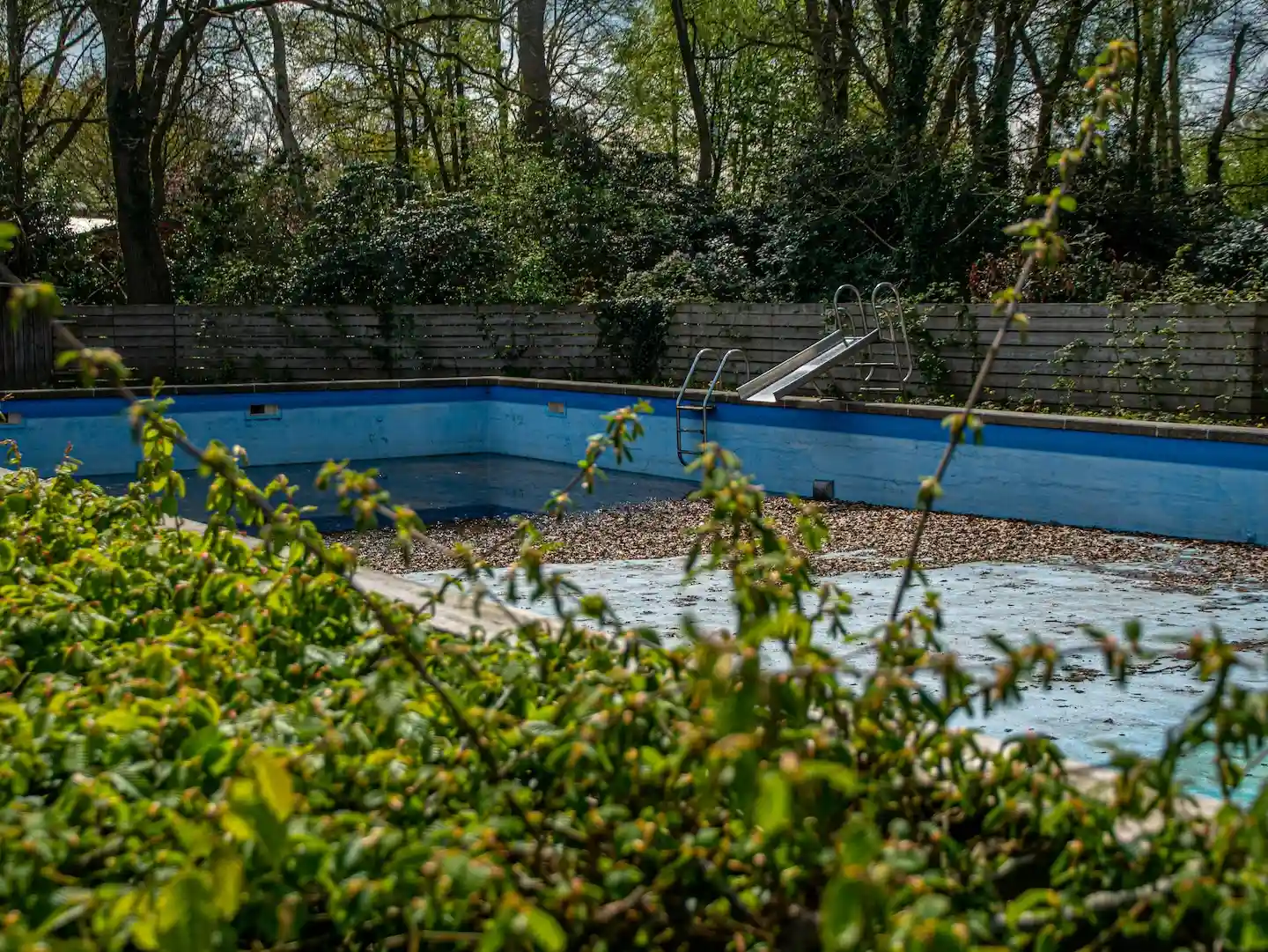
You’ve decided you want a pool. Now comes the question that’s stumping more and more Texas homeowners: should you go with a natural pool or a traditional one? It’s not a simple answer. Both options can be stunning, functional, and well worth the investment — but they serve different priorities, budgets, and lifestyles.
This guide breaks down everything you need to know about natural pools vs traditional pools, from upfront costs and long-term maintenance to health considerations and aesthetics. By the end, you’ll know exactly which type of pool fits your backyard and your life.
What Is a Natural Pool?
A natural pool — also called an eco pool or organic pool — uses biological filtration instead of chemicals to keep the water clean and safe for swimming. Rather than relying on chlorine, a natural pool harnesses aquatic plants, gravel beds, and beneficial bacteria to purify the water the same way a healthy pond or mountain stream does.
How Does a Natural Pool Work?
Natural pools are divided into two zones: a swimming area and a regeneration zone. The regeneration zone is planted with aquatic vegetation that acts as a living biofilter, drawing out contaminants and maintaining water quality through natural processes. Water circulates continuously between the two zones, keeping the swimming area clean without a single drop of chlorine. The swimming zone can be just as deep as a traditional pool — up to 12 feet — and can include stairs, lighting, and other features you’d expect from a conventional build.
Because the ecosystem does most of the filtering work, natural pools require less chemical intervention and, once established, significantly less ongoing maintenance than a conventional pool. Many homeowners find that after the first season, the system largely takes care of itself.
What Is a BioDesign Pool?
A BioDesign pool takes the natural pool concept further with patented technology that combines the organic aesthetic of a natural pool with high-performance engineering. Instead of concrete, BioDesign pools are built using EPDM waterproofing liners, quartz sand, and specially formulated resins applied by hand — resulting in a structure with 300% greater elasticity than traditional pool liners and twice the mechanical resistance of structural concrete.
Every BioDesign pool is custom-sculpted, meaning no two are alike. Beach entries, submerged seating areas, gradual shoreline contours, and natural stone textures are all part of what makes BioDesign pools so distinctive. The materials are free of heavy metals and polluting additives, and BioDesign has partnered with Microban® to incorporate antibacterial silver-ion technology directly into the resin coating — reducing bacterial growth on surfaces by up to 99%.
What Is a Traditional Pool?
A traditional inground pool uses a filtration system paired with chemical treatments — primarily chlorine — to keep the water sanitized and clear. The structure is typically concrete (gunite or shotcrete), fiberglass, or vinyl-lined, and the circulation system runs water through mechanical filters and chemical feeders on a regular schedule.
How Chlorine and Filtration Systems Work
In a traditional pool, the pump circulates water through a mechanical filter to remove debris, while chlorine and other chemicals (pH adjusters, algaecides, shock treatments) handle bacterial control and water clarity. Maintaining the right chemical balance requires weekly or even daily monitoring — measuring chlorine levels, pH, alkalinity, and calcium hardness. When any of these fall out of range, the water becomes either unsafe to swim in or damaging to the pool’s surfaces and equipment.
Traditional pools are the more familiar option, and what most pool builders specialize in. They’re widely understood, widely serviced, and can be built faster than natural pools.
Natural Pool vs Traditional Pool: Side-by-Side Comparison
| Factor | Natural Pool | Traditional Pool |
| Installation Cost | $50,000–$70,000+ | $35,000–$65,000 |
| Annual Maintenance Cost | ~$500–$1,200 | ~$1,200–$1,800 |
| Chemical Use | None or minimal | Regular chlorine & chemical treatments |
| Space Required | Larger (includes regeneration zone) | Standard footprint |
| Aesthetics | Organic, naturalistic | Conventional, geometric or freeform |
| Environmental Impact | Low | Moderate to high |
| Installation Timeline | 12–16 weeks | 8–12 weeks |
| Long-Term Durability | Very high (EPDM liners last 30+ years) | High (vinyl liners 10–15 years) |
Cost Comparison: Upfront Investment vs Long-Term Savings
Installation Costs
Traditional inground pools in the Austin and Spicewood area typically run between $35,000 and $65,000 to install, depending on size, materials, and features. Natural pools — including BioDesign pools — generally start around $50,000 and can go higher, largely because they require additional space for the regeneration zone, more complex landscaping, and specialized construction expertise.
The upfront gap is real, but it’s only part of the financial picture.
Annual Maintenance Costs
Where natural pools gain a significant advantage is in ongoing costs. A traditional pool can run $1,200 to $1,800 per year in maintenance expenses once you factor in chemical purchases, filter upkeep, and routine servicing. A natural pool, by contrast, typically costs between $500 and $1,200 annually because the biological filtration system eliminates the need for regular chemical purchases and reduces the number of mechanical components that need replacing.
Over a 20-year period, that difference compounds considerably. A traditional pool that costs $75,000 to install and $4,000 per year in maintenance adds up to roughly $170,000 or more over two decades. A natural pool installed at $100,000 with $1,500 in annual maintenance totals closer to $130,000 over the same period — despite the higher starting price. For homeowners planning to stay in their home long-term, natural pools offer a compelling financial case.
Maintenance: Which Pool Is Easier to Care For?
This is where natural pools and traditional pools diverge most noticeably in day-to-day life.
Owning a traditional pool means committing to a consistent maintenance routine. You’ll need to monitor chemical levels multiple times per week, shock the pool regularly, clean the filter, run the pump for several hours daily, and stay on top of algae prevention. Miss a few days and you may return to cloudy water or worse. Many traditional pool owners budget for a professional service company to handle weekly maintenance, which adds another recurring cost.
Natural pools are more forgiving. Once the ecosystem is established, the plants and beneficial bacteria handle the bulk of the purification work. You’ll still skim the surface and brush the pool about once a week, and the regeneration zone will need trimming and clearing on a monthly or bimonthly basis. But there’s no chemical balancing, no pH testing, and no concern about whether the chlorine level is high enough after a busy weekend of swimming. The biological system is self-regulating in a way that mechanical and chemical systems simply aren’t.
Health and Safety: Chemical-Free vs Chlorinated Water
For families who swim frequently, the health difference between a natural pool and a traditional pool deserves serious consideration.
Chlorine is effective at killing bacteria, but it’s not without side effects. Regular exposure to chlorinated water can cause eye irritation, dry skin and hair, and a lingering chemical smell. In some individuals — especially children and frequent swimmers — chlorine has been linked to respiratory irritation and skin sensitivity. According to the CDC, thousands of emergency room visits each year are tied to pool chemical injuries, the majority involving children under 17.
Natural pools and BioDesign pools eliminate these concerns entirely. The water is free of harsh chemicals, gentler on skin and eyes, and many swimmers report it simply feels better to swim in. For families with young children, pets, or anyone with sensitivities to chlorine, a chemical-free pool isn’t just a lifestyle preference — it’s a meaningful health upgrade.
Environmental Impact
If sustainability matters to your household, natural pools win this comparison clearly. Traditional pools consume significant amounts of energy to run pumps and heaters, and the chemicals used for sanitation can have lasting environmental impact if they enter the soil or surrounding ecosystem.
Natural pools and BioDesign pools are built from eco-friendly materials — no concrete production with its associated carbon emissions, no toxic additives, and no chemical runoff. The regeneration zone actively creates habitat for local wildlife, supports pollinators, and contributes to the biodiversity of your property. In a region like the Texas Hill Country, where the landscape is defined by its natural beauty, a pool that works with the environment rather than against it is a natural fit.
Aesthetics and Customization Options
Traditional pools offer plenty of design freedom — from classic rectangular lap pools to freeform shapes, infinity edges, raised spas, and beach entries. Texas Innovative Pools builds custom inground pools across a wide range of styles, and our 3D design process lets homeowners visualize exactly what their finished pool will look like before a single shovel hits the ground.
That said, natural pools and BioDesign pools occupy a different aesthetic category entirely. Because every BioDesign pool is hand-sculpted without concrete, the design possibilities are virtually unlimited. Soft, organic curves replace rigid angles. Gradual beach entries feel like stepping into a natural shoreline. Rock formations, underwater seating ledges, and submerged walkways can all be incorporated seamlessly. The result is less “backyard pool” and more “private natural oasis” — a design that looks like it was always there.
For homeowners in Austin, Spicewood, and the surrounding Hill Country who want a backyard that feels like a retreat rather than a construction project, the visual impact of a natural BioDesign pool is hard to match.
Which Pool Is Right for You?
Neither pool type is universally better — the right choice depends on your priorities. Here’s a straightforward breakdown to help you decide:
Choose a natural pool or BioDesign pool if:
- You want lower long-term maintenance and operating costs
- Your family swims frequently and you want to avoid chemical exposure
- Sustainability and eco-friendly construction matter to you
- You want a completely custom, one-of-a-kind design that blends into the landscape
- You have children, pets, or family members with chlorine sensitivities
- You’re planning to stay in your home long-term and want to maximize your return on investment
Choose a traditional pool if:
- You’re working with a tighter upfront budget
- You need a faster construction timeline
- Your yard has limited space and can’t accommodate a regeneration zone
- You prefer a more conventional aesthetic with familiar maintenance practices
Already have a traditional pool and wish it were different? Pool remodeling is another path worth exploring — in many cases, existing pools can be significantly transformed in terms of features, aesthetics, and even filtration approach.
Frequently Asked Questions About Natural Pools vs Traditional Pools
Q: Are natural pools safe to swim in? A: Yes. When properly designed and maintained, natural pools produce water quality comparable to or better than many public pools. The biological filtration system — using aquatic plants, gravel, and beneficial bacteria — continuously purifies the water without chemicals. BioDesign pools take this further with Microban® antibacterial resin technology built directly into the pool surface. The absence of chlorine also means no eye irritation, no chemical smell, and no dry skin after swimming.
Q: How much does a natural pool cost compared to a traditional pool? A: Traditional inground pools typically run $35,000–$65,000 to install, while natural pools average $50,000–$70,000 due to the added complexity of the regeneration zone and specialized construction. However, natural pools cost significantly less to maintain annually — roughly $500–$1,200 per year versus $1,200–$1,800 for a traditional pool — making them more cost-effective over time for most homeowners.
Q: What is a BioDesign pool? A: BioDesign is a patented pool construction system developed over 40+ years that creates fully custom, natural-looking pools without concrete. Using EPDM liners, quartz sand, and hand-applied resin coatings, BioDesign pools are sculpted into any shape imaginable — beaches, submerged seating, organic contours — and are built to outlast traditional pool structures. Texas Innovative Pools is a certified BioDesign installer serving Austin and Spicewood, TX.
Q: Do natural pools attract mosquitoes? A: No. Mosquitoes breed in stagnant water, and natural pools maintain constant water circulation throughout the system, which prevents breeding. The regeneration zone also attracts natural predators like dragonflies and frogs that actively reduce the mosquito population in the surrounding yard.
Q: How much space does a natural pool require? A: Natural pools need more space than traditional pools because they include a separate regeneration zone that’s roughly the same size as the swimming area. A small or tight backyard may not be the best fit. If space is limited, it’s worth discussing design options with our team — there may be creative solutions depending on your property layout.
Q: Can I convert my existing pool into a natural pool? A: In many cases, yes. Existing inground pools can be converted by adding a regeneration zone, reworking the filtration system, and updating the interior surfaces. The feasibility and cost depend on your current pool’s structure and your goals. Our team can walk you through the options during a free consultation.
Ready to Find Out Which Pool Is Right for Your Backyard?
Whether you’re drawn to the chemical-free beauty of a natural BioDesign pool or a fully custom inground build tailored to the Texas Hill Country landscape, Texas Innovative Pools has the expertise to bring your vision to life. We serve homeowners throughout Austin, Spicewood, and the surrounding area, and we back every project with PHTA certification, 38+ years of experience, and a commitment to quality that doesn’t compromise.
Schedule your free consultation today and let’s figure out exactly which pool is the right fit for you.