
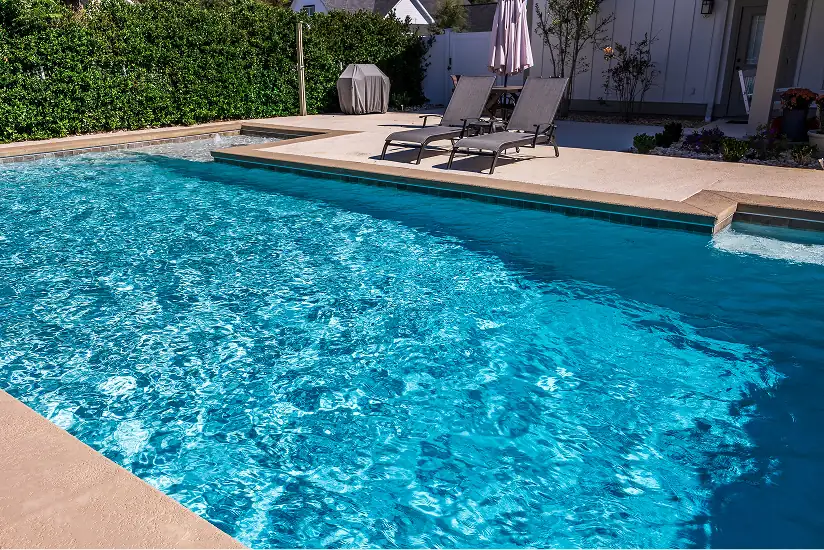
Saltwater pool installation has become one of the most requested upgrades among Texas homeowners, and for good reason. Salt-based systems mean less handling of harsh chemicals, gentler water on skin and swimwear, and a lower-maintenance routine overall.
Before committing to the switch, though, it helps to understand what the installation actually involves, what it costs, and how the choice between a gunite shell and a fiberglass shell changes the equation. Here’s what the Texas Innovative Pools team walks homeowners through during that decision.
How a Saltwater System Actually Works
A saltwater pool isn’t chlorine-free. Instead of adding chlorine directly, a salt chlorine generator converts dissolved salt into chlorine through electrolysis, producing a steady, low-level supply rather than the spikes that come with manual dosing. The water still contains chlorine, just at a lower concentration and without the sharp smell or skin irritation many swimmers associate with traditional pools.
The system runs through a salt cell installed in the equipment pad, tied into the existing filtration and circulation setup. For homeowners building new or remodeling an existing pool, this is a relatively straightforward addition as long as the plumbing and equipment pad can accommodate it. Homeowners exploring a new custom pool build can have the salt system designed into the project from the start rather than added on later.
What Saltwater Pool Installation Costs in Texas
Cost depends on whether the salt system is part of new construction or being added to an existing pool. As part of a new build, the salt chlorine generator is typically bundled into the overall equipment package, adding a modest amount to the total project cost. Retrofitting an existing chlorine pool tends to cost more on a standalone basis, since it may require additional plumbing work or bonding to meet code depending on the setup.
Ongoing costs run lower with saltwater systems in most cases. Homeowners save on the recurring cost of chlorine tablets or liquid chlorine, though the salt cell itself is a wear item that typically needs replacement every three to seven years depending on usage and water balance.
Gunite Pool Builder Considerations for Saltwater Systems
Working with an experienced gunite pool builder matters more with saltwater systems than some homeowners expect. Gunite, a sprayed concrete and sand mixture, is durable and fully customizable in shape, but it’s also more porous than fiberglass, which means surface finishes need to be selected with saltwater exposure in mind. Certain plaster and aggregate finishes hold up better than others against the mineral content in saltwater, and an experienced builder will steer the selection accordingly.
Gunite construction also allows for integrated features like tanning ledges, spas, and custom step designs, which pairs well with the flexibility Texas homeowners often want out of a custom pool anyway.
Fiberglass Pool Builder Considerations for Saltwater Systems
A fiberglass pool builder works with a different set of tradeoffs. Fiberglass shells are manufactured off-site and installed as a single piece, which usually means a shorter construction timeline than gunite. The gel coat surface is naturally smoother and less porous, which many builders consider an easier long-term match for saltwater exposure since there’s less surface area for mineral buildup to affect.
The tradeoff is less flexibility in shape and size, since fiberglass pools come from a set of manufactured molds rather than being poured to a custom design. For homeowners who want a specific layout or built-in features tailored to an unusual lot, gunite construction usually offers more room to work with.
Choosing Between Gunite and Fiberglass for a Saltwater Pool
Neither shell type is a wrong choice for saltwater, but the right fit depends on priorities. Homeowners focused on a faster installation timeline and lower long-term surface maintenance often lean fiberglass. Homeowners who want full design flexibility, unusual shapes, or integrated features tend to land on gunite, accepting a longer build time in exchange for a fully custom result.
A PHTA-certified builder can walk through both options against the specifics of a lot, budget, and design goals rather than defaulting to one material across the board.
Maintaining a Saltwater Pool Once It’s Installed
Saltwater systems still require regular attention, just less of it than a manually chlorinated pool. Salt levels need periodic testing to stay within the range the system’s manufacturer recommends, and the salt cell itself should be inspected for scale buildup a few times a season. Water balance, including pH and alkalinity, still needs the same regular monitoring any pool requires, since a saltwater system doesn’t eliminate the need for water chemistry management, it just changes how the chlorine gets there.
Homeowners who find their existing pool showing wear alongside these checks often fold saltwater conversion into a broader pool remodeling project rather than tackling it as a separate job.
Frequently Asked Questions
Is a saltwater pool cheaper to maintain than a chlorine pool?
Generally, yes, on chemical costs. The salt cell itself needs periodic replacement, which offsets some of that savings over time.
Can I convert an existing chlorine pool to saltwater?
In most cases, yes. The process usually involves installing a salt chlorine generator and salt cell, and a builder should confirm the existing plumbing and equipment can support it.
Does a saltwater pool need a gunite or fiberglass shell?
Either works. The choice comes down to design flexibility, construction timeline, and surface preferences rather than compatibility with the saltwater system itself.
How often does a salt cell need to be replaced?
Typically every three to seven years, depending on usage patterns and how well the water chemistry is maintained.
Building the Right Saltwater Pool for Your Backyard
Saltwater installation is one part of a larger set of decisions that shape how a pool performs for years to come, from shell material to equipment selection to finish.
Texas Innovative Pools works through each of those decisions with homeowners directly, backed by PHTA-certified standards and decades of structural experience building for Texas soil and climate conditions, so the right combination of shell type and equipment gets chosen from the outset rather than fixed after the fact. Contact us to get started on your saltwater pool.