
If you’re a Texas homeowner seriously thinking about building a pool, one question comes before every other: how much does a pool cost? It’s a fair question — and one that deserves a straight answer, not a vague “it depends.”
The short version: in Texas, most inground pools fall somewhere between $35,000 and $100,000+, depending on the size, construction type, site conditions, and features you choose. But getting from that range to a number that actually applies to your backyard requires understanding what drives pricing. That’s exactly what this guide covers.
Average Pool Cost in Texas (2026)
Texas homeowners looking to build a pool in 2026 should plan for a baseline investment that varies significantly based on pool type. Here’s a realistic starting framework:
| Pool Type | Typical Price Range |
| Basic Inground (vinyl liner) | $35,000 – $55,000 |
| Fiberglass Inground | $45,000 – $70,000 |
| Gunite / Concrete Inground | $55,000 – $100,000+ |
| Above-Ground Pool | $5,000 – $20,000 |
These figures reflect full installation costs — excavation, equipment, decking, and finishes — not just the pool shell. Custom features like spas, water features, outdoor kitchens, or elaborate landscaping will push the final number higher.
Inground Pool Cost by Type
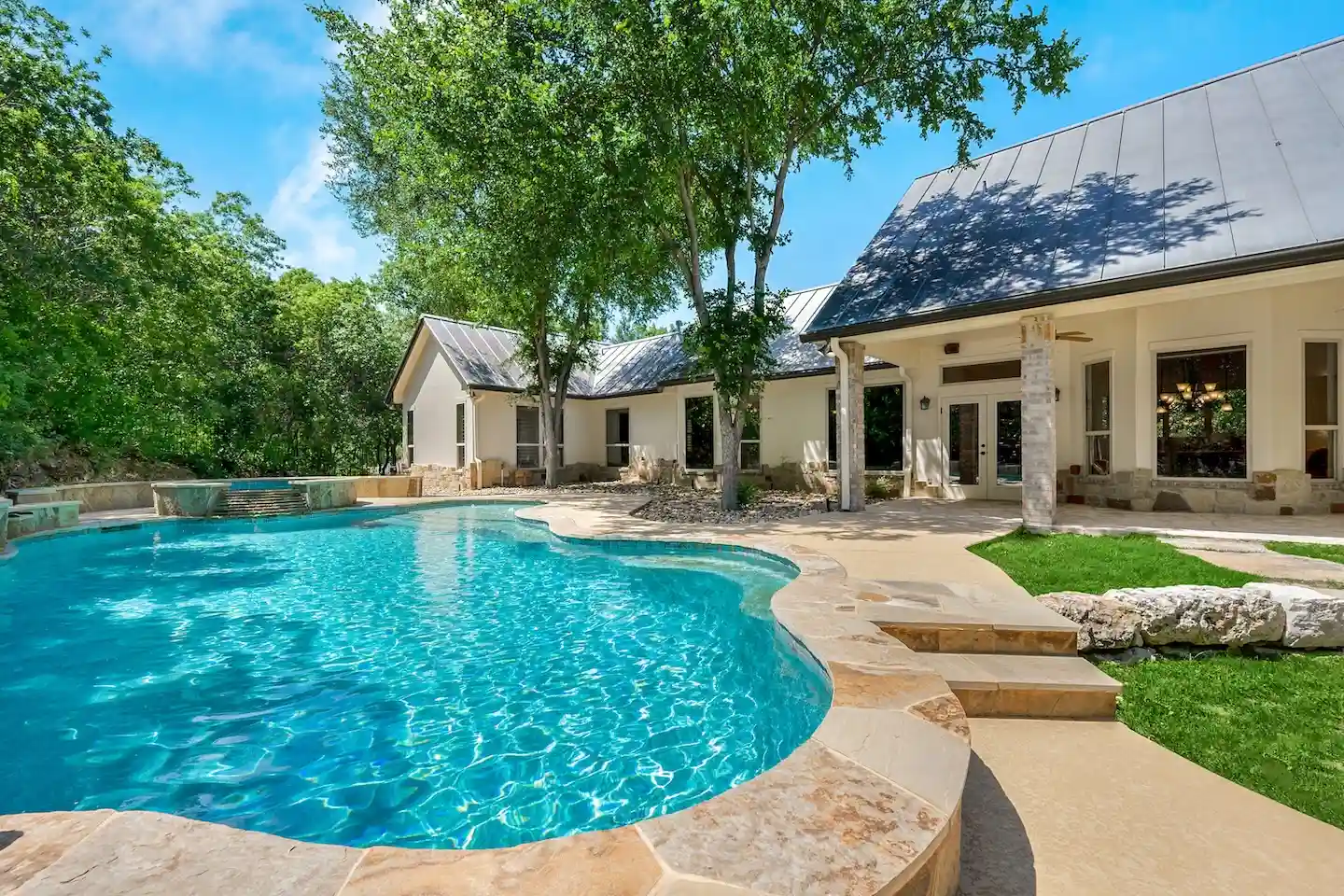
Gunite (concrete) pools are the most popular choice in Texas Hill Country and surrounding areas, and for good reason. They’re fully custom — any shape, any depth, any feature — and built to last decades. That flexibility comes at a cost: expect to budget $55,000 at minimum, with luxury builds easily reaching $150,000 or more. If you want a vanishing edge, a raised spa, fire bowls, or a grotto waterfall, gunite is typically the only option that delivers.
Fiberglass pools offer a faster build timeline (often 4–8 weeks versus 10–14 for gunite) and a smooth, low-maintenance interior surface. They come in pre-molded shapes, which limits customization but keeps costs more predictable. Most fiberglass pools in Texas land between $45,000 and $70,000 fully installed.
Vinyl liner pools represent the most affordable inground entry point, typically running $35,000–$55,000. The liner itself will need replacement every 10–15 years (a $3,000–$6,000 expense), and they don’t support the same level of custom shapes or features as gunite.
Above-Ground Pool Cost
Above-ground pools start significantly lower — often $5,000–$20,000 including installation — but offer limited design options, shorter lifespans, and minimal property value impact. For most Texas homeowners making a long-term investment in their property, an inground pool is the better fit.
What Factors Affect Pool Pricing in Texas?
No two pool projects are identical. Once you understand the variables that move the needle, estimates start to make a lot more sense.
Pool Size and Shape
Size is one of the biggest cost drivers. A modest 12×24 pool will cost considerably less than a 20×40. Freeform and custom shapes (think lagoon-style or L-shaped) require more labor and formwork than a simple rectangle, especially with gunite. Most Texas families end up in the 14×28 to 16×32 range, which balances functionality with budget.
Materials: Gunite, Fiberglass, or Vinyl?
Beyond the basic structure, interior finishes play a major role in both upfront cost and long-term satisfaction. Standard plaster is the most affordable finish, but quartz and pebble/mini-pebble finishes offer better durability and richer color depth — and they hold up better under Texas’s intense heat and heavy use. Pebble finishes typically add $3,000–$8,000 over standard plaster but can last 15–20 years versus 7–10 for standard plaster.
Coping, tile, and decking materials also factor in significantly. Natural stone coping costs more than concrete but adds lasting curb appeal. For custom inground pool builds, these material decisions are where personalization — and cost — really accumulates.
Add-Ons and Features (Spa, Waterfall, Lighting)
Popular upgrades and what they typically add to the project cost:
- Attached spa: $10,000–$20,000
- Tanning ledge / Baja shelf: $3,000–$6,000
- Waterfall or grotto: $5,000–$15,000
- LED lighting package: $2,000–$5,000
- Fire bowls or fire features: $3,000–$8,000 each
- In-floor cleaning system: $4,000–$8,000
- Outdoor kitchen / cabana: $20,000–$60,000+
These features can transform a basic pool into a full resort-style backyard retreat — but it’s important to budget for them upfront rather than as afterthoughts. Adding a spa or outdoor living space after construction is nearly always more expensive than building them together. Texas Innovative Pools handles both pool construction and outdoor living spaces as a single contractor, which keeps the process coordinated and cost-efficient.
Site Conditions and Excavation
What’s below the surface matters. Rocky terrain — common throughout the Texas Hill Country — significantly increases excavation costs. Areas with caliche, limestone, or dolomite require specialized equipment and more labor hours to dig. A site that would cost $3,000–$5,000 to excavate on flat, sandy soil might run $8,000–$15,000 in rocky Hill Country terrain. Responsible pool builders account for this in their estimates from day one.
Texas-Specific Cost Considerations
National pool pricing guides often underestimate what Texas homeowners will actually pay. Here’s why building in Texas carries its own set of cost variables.
Local Permits and HOA Requirements
Every Texas municipality requires a building permit for inground pool construction. Permit costs generally range from $150 to $500+, though larger cities or custom builds can run higher. Your contractor should pull the permit on your behalf — that’s a standard part of the process.
If you live in an HOA community, you may also need written approval before construction begins. Some HOAs specify fencing requirements, equipment placement, or aesthetic standards that affect design choices and budget. Factor in 2–6 weeks for permit and HOA approval when planning your project timeline.
Climate, Soil, and Regional Labor Rates
Texas’s long, hot summers are a genuine advantage for pool ownership — you’ll get more months of use per year than most of the country. However, that same climate means your pool equipment works harder. Variable-speed pumps and proper chemical management are especially important in Texas, where high UV exposure and heat accelerate algae growth and chemical consumption.
Labor rates vary by region. Major metro areas (Austin, Houston, Dallas, San Antonio) typically carry higher labor costs than rural markets. In the Hill Country and surrounding areas, contractors who specialize in rocky terrain excavation are worth their premium — cutting corners on site prep is where many pool projects run into problems and unexpected costs.
Pool Cost Breakdown: What You’re Actually Paying For
When you receive a pool estimate, you’re looking at a combination of these cost categories:
Excavation and site prep — Digging, hauling dirt, and preparing the site. Highly variable based on terrain. Typical range: $3,000–$15,000.
Structural shell — The gunite, fiberglass, or vinyl liner installation itself. This is the core of the project. Range: $15,000–$40,000+ depending on type and size.
Plumbing and equipment — Pump, filter, heater, plumbing lines, and automation system. Quality equipment pays for itself in efficiency and longevity. Range: $8,000–$20,000.
Interior finish — Plaster, quartz, or pebble surface. Range: $5,000–$15,000.
Decking and coping — Concrete, pavers, or stone surrounding the pool. Range: $8,000–$25,000.
Electrical and lighting — GFCI circuits, bonding, and lighting package. Range: $3,000–$8,000.
Permits and inspections — Typically $300–$1,500 total.
Landscaping and finishing — Fencing, grass, plants, and hardscape elements. Highly variable; often $5,000–$30,000+ for full landscape and hardscape work.
How to Finance a Pool in Texas
Cost is the most common reason Texas homeowners delay a pool project. But with the right financing approach, a pool that fits your budget is more achievable than you might think.
Pool Loans vs. Home Equity Options
Unsecured pool loans are the simplest route — no home equity required, faster approval, and funds are typically available within days. The tradeoff is a higher interest rate (often 7–15% depending on creditworthiness) and shorter repayment terms (5–12 years). Monthly payments on a $60,000 pool loan at 9% over 10 years run approximately $760/month.
Home equity loans and HELOCs offer lower interest rates for homeowners with significant equity — often 6–8% in today’s market. A HELOC gives you a revolving credit line you draw from as construction progresses, while a home equity loan delivers a lump sum upfront. These options require more paperwork and take longer to close, but can save thousands in interest over the life of the loan.
Contractor financing programs are a convenient third option. Texas Innovative Pools works with trusted financing partners to offer competitive rates and terms tailored to pool projects specifically.
What Monthly Payments Look Like
To give you a realistic sense of what pool financing looks like in 2026:
| Loan Amount | Term | Est. Rate | Monthly Payment |
| $45,000 | 10 years | 8.5% | ~$558/mo |
| $60,000 | 10 years | 8.5% | ~$744/mo |
| $75,000 | 12 years | 7.5% | ~$843/mo |
| $100,000 | 15 years | 7% | ~$899/mo |
Estimates only — actual rates vary based on credit profile and lender.
How to Get an Accurate Pool Quote
The best way to understand what your specific project will cost is to get a detailed, on-site estimate from a qualified pool contractor — not a ballpark figure over the phone.
A reputable contractor will visit your property to evaluate soil and terrain conditions, discuss your vision and prioritize features within your budget, pull accurate permit cost estimates for your municipality, and provide a detailed written proposal with itemized costs. At Texas Innovative Pools, every project starts with a free consultation and a 3D design process included at no extra charge — so you can see exactly what you’re getting before any ground is broken.
When comparing quotes, be cautious of estimates that come in significantly lower than others. A lower bid often means corners being cut in excavation, equipment quality, or finish materials — areas you won’t notice until years later when problems surface.
Frequently Asked Questions About Pool Costs in Texas
Q: What is the average cost of an inground pool in Texas? A: In Texas, inground pools typically range from $35,000 to $100,000+, depending on size, material, and features. Gunite pools tend to cost more ($55,000–$100,000+) due to fully custom construction, while fiberglass pools can come in at the lower end ($45,000–$70,000) with faster installation timelines.
Q: Is a pool a good investment in Texas? A: In Texas’s warm climate, a pool can meaningfully increase your home’s appeal and value — especially in markets like Austin, San Antonio, and the Hill Country where outdoor living is a top priority for buyers. Pools are widely cited as adding 5–8% to home value, though ROI varies by neighborhood and pool quality. More importantly, for the 9+ months a year you can comfortably use a pool in Texas, the lifestyle value is hard to overstate.
Q: How long does it take to build a pool in Texas? A: A typical inground gunite pool build takes 10–14 weeks from permit approval to completion. Fiberglass pools can be faster (4–8 weeks). Custom builds with extensive outdoor living elements may take longer. Scheduling during off-peak months (fall and winter) can sometimes reduce lead times.
Q: What financing options are available for a pool in Texas? A: Texas homeowners can finance a pool through unsecured pool loans, home equity loans or HELOCs, or contractor financing programs. Unsecured loans offer faster approval but higher rates. HELOCs often offer better rates for homeowners with significant equity. Texas Innovative Pools offers financing through trusted lending partners — visit the financing page for current options.
Q: What are the ongoing costs of owning a pool in Texas? A: Budget approximately $1,200–$2,400 per year for routine maintenance — chemicals, cleaning, and equipment servicing. Electricity for the pump adds to monthly utility bills (a variable-speed pump significantly reduces this cost). Plan for periodic resurfacing every 10–15 years and equipment replacement over the pool’s lifetime.
Q: Do I need a permit to build a pool in Texas? A: Yes — virtually all Texas municipalities require a building permit for inground pool construction. HOA approval may also be required in some communities. Permit costs typically range from $150 to $500+, and your pool contractor should manage the permit application process on your behalf.
Ready to Find Out What Your Pool Will Cost?
Building a pool is one of the most rewarding investments a Texas homeowner can make — and the more informed you are going in, the better the outcome. If you’re ready to move from researching costs to getting a real number for your specific project, Texas Innovative Pools is here to help.
With 38+ years of experience in concrete, structural steel, and pool construction — and a team of PHTA Certified Pool Builders — we bring the expertise to build your project right the first time. Schedule your free consultation today and get a detailed, on-site assessment and 3D design at no cost to you.