
If you’re designing or upgrading a backyard pool in Texas, one of the decisions that might sneak up on you is what to do with the ground around it. Concrete and pavers handle a lot of the deck area, but plenty of backyards still have a significant stretch of lawn surrounding the pool — and whether to keep that as natural grass or go with artificial turf is a question we hear from homeowners all the time.
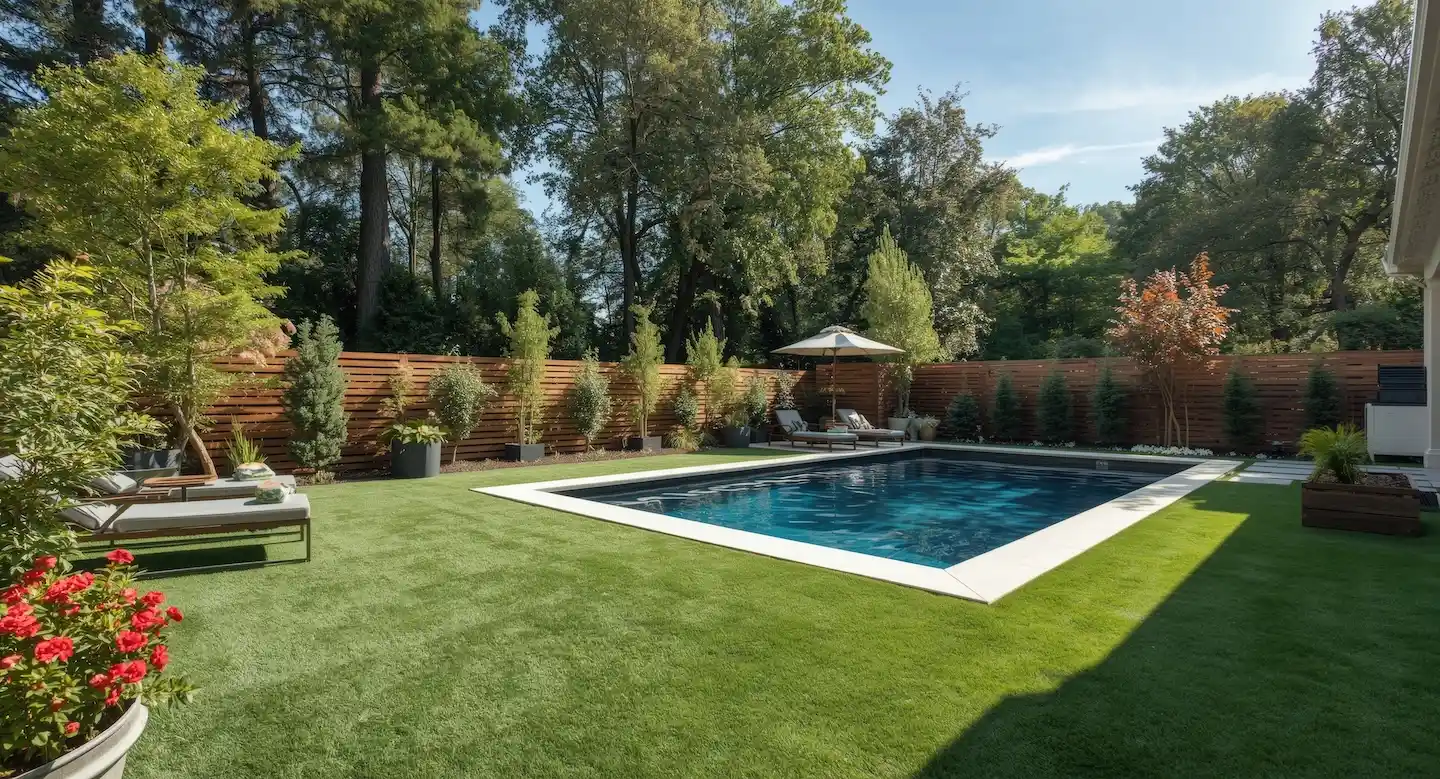
Both options have real merit, and the right choice depends on your lifestyle, your yard, pool landscaping, and how you want to spend your weekends. Here’s an honest look at both.
Artificial Turf Around Your Pool: What You Need to Know
The Case for Artificial Turf
The biggest appeal of artificial turf is simple: once it’s in, it’s done. No mowing, no watering, no fertilizing, no worrying about brown patches during a dry Texas summer. For homeowners who want a lush, green yard without the upkeep, artificial turf installation is an increasingly popular solution — and the products available today look and feel dramatically better than what people remember from a decade ago.
Around a pool specifically, artificial turf offers some practical advantages. It doesn’t get muddy, so you’re not tracking dirt onto your pool deck after a rainstorm. It stays consistently green regardless of foot traffic or drought conditions, which matters in Central Texas where summer heat can devastate a natural lawn. And because it doesn’t require irrigation in the traditional sense, it can actually reduce your water bill — a meaningful benefit in areas with watering restrictions.
From a pool landscaping standpoint, turf also gives designers flexibility. It can be installed right up to the edge of a deck, blended with stone or pavers, or used as a defined zone within a larger hardscape layout. We’ve used it in backyard designs as everything from a putting green to a soft lounge area adjacent to a sun shelf — and it always adds a polished, intentional look.
The Drawbacks of Artificial Turf
Artificial turf does get warm. In full Texas sun, the surface temperature of synthetic grass can climb significantly higher than natural grass, which is worth considering if kids or pets will be running across it barefoot. Shaded areas or turf products with cooling infill technology can help, and this is something to discuss during the design phase.
The upfront cost of artificial turf installation is also higher than seeding or sodding natural grass. It’s a longer-term investment that pays off over time through reduced maintenance and water costs, but the initial outlay is real. And while modern turf is far more durable and natural-looking than older versions, it’s not identical to grass — some homeowners simply prefer the real thing.
Natural Grass Around Your Pool: Still a Great Option
The Case for Natural Grass
There’s a reason grass has been the default for so long. It’s cooler underfoot than almost any hardscape or synthetic material, it looks beautiful when well-maintained, and it’s generally less expensive to establish. For families who love the feel of a traditional backyard — kids running barefoot, the smell of a freshly mowed lawn — natural grass delivers something artificial turf can’t fully replicate.
Natural grass is also self-repairing to a degree. Bare spots can fill back in, and if a section gets damaged it can be reseeded or re-sodded relatively easily. For homeowners who enjoy yard work and take pride in a well-kept lawn, maintaining natural grass around a pool can be genuinely satisfying.
The Drawbacks of Natural Grass
Around a pool, grass comes with challenges that aren’t as present elsewhere in the yard. Grass clippings, pollen, and debris get tracked into the pool constantly during mowing season. Irrigation near the pool can lead to muddy zones that dirty up the deck. Heavy foot traffic around popular pool entry points tends to wear down natural grass quickly, creating bare patches that look rough by mid-summer.
In Texas, the ongoing maintenance demands are also real. Keeping a green lawn through July and August takes consistent watering, and many grass varieties struggle in the intense heat without significant attention. From a pool landscaping perspective, natural grass also requires more careful planning to keep it looking intentional rather than just… there.
So Which One Is Right for You?
For most Texas homeowners who want a low-maintenance, polished backyard that looks great year-round, artificial turf installation is hard to beat — especially in areas that get heavy pool use. For homeowners who love the traditional lawn aesthetic and don’t mind the upkeep, natural grass is still a perfectly solid choice, particularly in shadier yards where heat buildup is less of a concern.
The honest answer is that many of our favorite pool landscaping projects use both. A combination of hardscape, turf, and natural planting beds gives you the best of each world — clean, durable surfaces where it matters most, green softness where it looks best, and native plants filling in the gaps with minimal water needs.
At Texas Innovative Pools, we design the full picture — pool, deck, turf, landscaping, and outdoor living features — as one integrated project. That means your turf placement, your planting beds, and your hardscape all work together rather than competing.
Want to talk through what makes sense for your specific yard? Schedule a free consultation and let’s figure it out together.